


Lake fly fishing is a different game. Finding trout in a river is one thing, but finding them in a thousand acres of open water is a whole different game.
Cody Burgdorff and Devin Olsen of Team USA joined the show to talk about lake fly fishing, one of the most important and most misunderstood parts of competitive fly fishing.
They broke down how they approach a brand new lake, how they work through the water column from shallow to deep, and how they systematically find trout when they have zero information to start with. They also got into the gear, lines, and leader setups they lean on most when the competition is on the line.


Find the show: Follow the Show | Overcast | Spotify
Show Notes on Lake Fly Fishing with Cody Burgdorff and Devin Olsen
Cody Burgdorff and Devin Olsen share how Team USA prepares for one of the biggest fly fishing competitions in the world. They explain why lake sessions often determine championship results, how they break down unfamiliar water, and the progression they use to locate trout throughout the water column.
Preparing for the World Fly Fishing Championship
(01:29) Cody shares how he got his start in competition fly fishing after being introduced to a Team USA member through his local fly shop. Like Jack Arnot and Mike Komara, he worked his way through the youth competition program before earning a spot on the men’s team in 2018. This year’s World Championship is especially meaningful because he’ll be competing on home water.
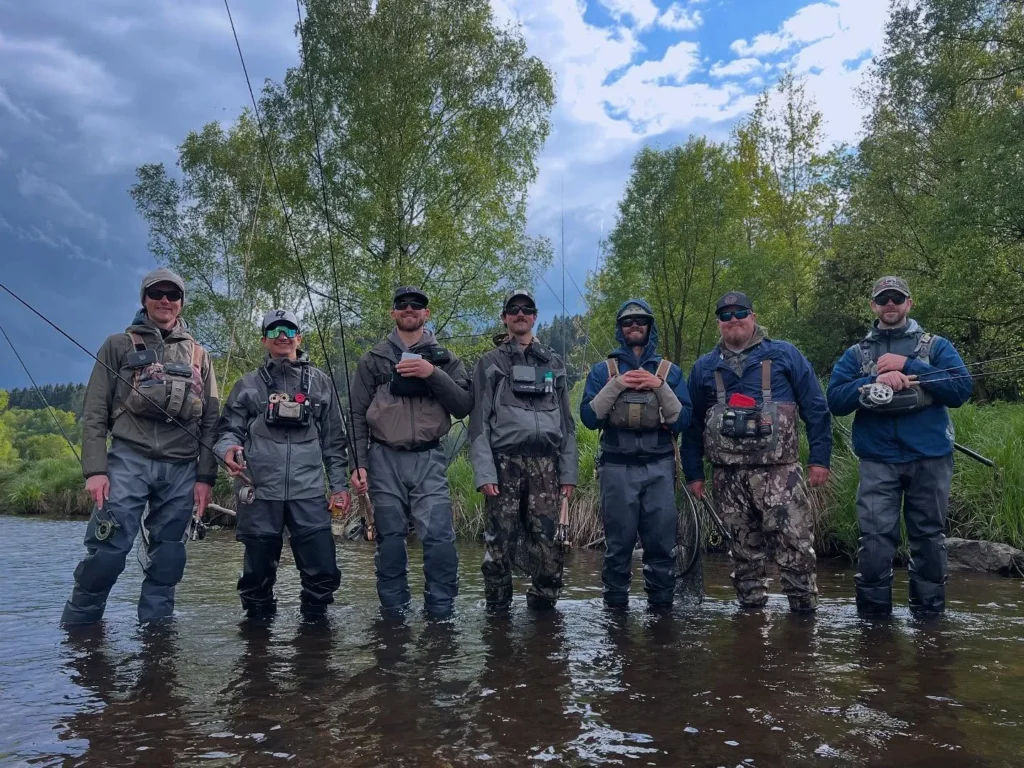
Devin also talks about the team’s recent practice trip to Idaho, where they spent several days fishing the championship venues and nearby rivers. Beyond the time on the water, the trip gave teammates a chance to swap ideas, compare techniques, and learn from one another before the competition.
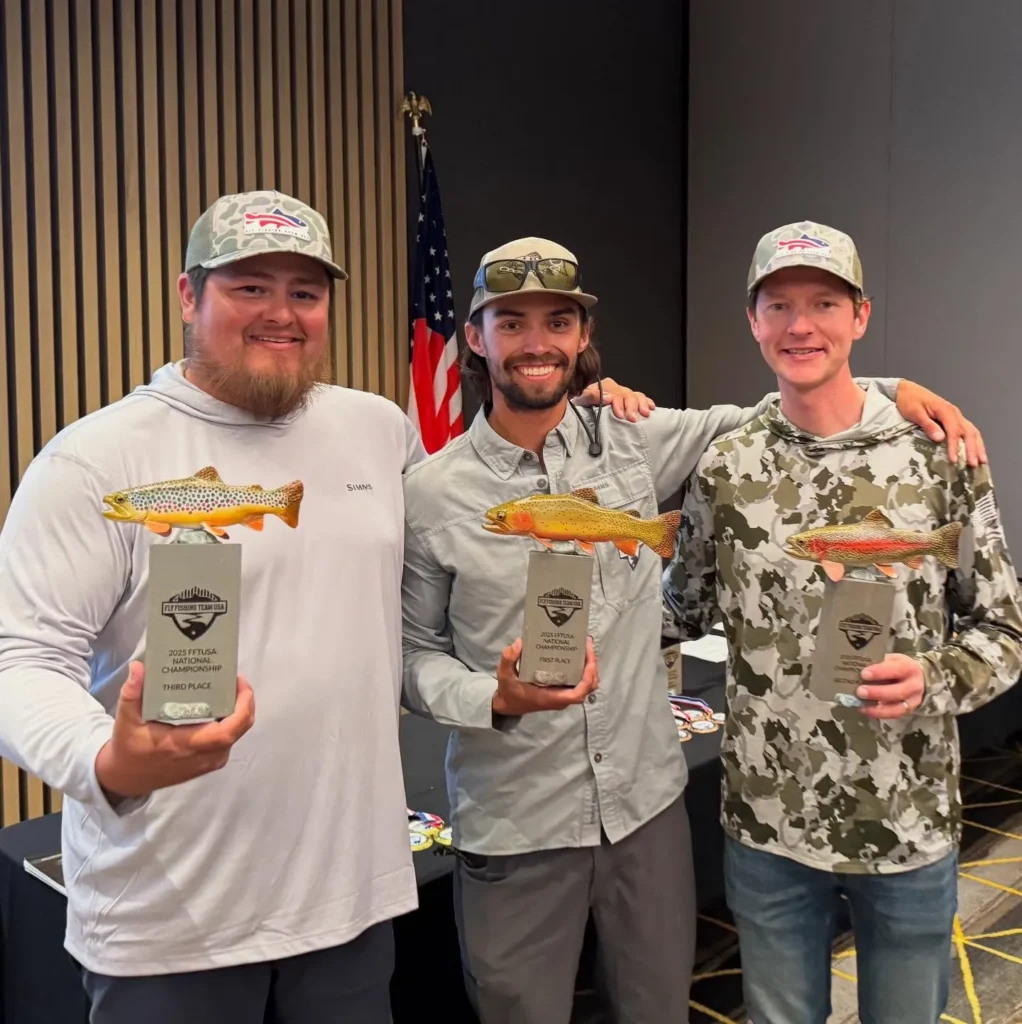
Photo via https://www.instagram.com/flyfishingteamusa/
Lake Fly Fishing in Competition
(04:23) Devin says lake fly fishing is a core part of competitive fly fishing. At this year’s World Fly Fishing Championship, two of the five sessions will be held on lakes, and some past championships have featured even more.
In boat competitions, two anglers from different countries share the same boat. Each angler takes turns controlling the boat for half the session, and while they’re competing against each other, they often work together so the boat performs well overall.
Depending on the championship, lake sessions are held either from boats or from the bank. When it’s a bank competition, anglers rotate through different beats so everyone gets a chance to fish multiple sections of the lake.
This year’s venues are still being finalized because of low water conditions. The current plan includes Hebgen Lake along with either Sheridan Lake or Chesterfield Reservoir, depending on water levels before the championship.
Is There One Right Way to Fish a Lake?
Not according to Cody and Devin.
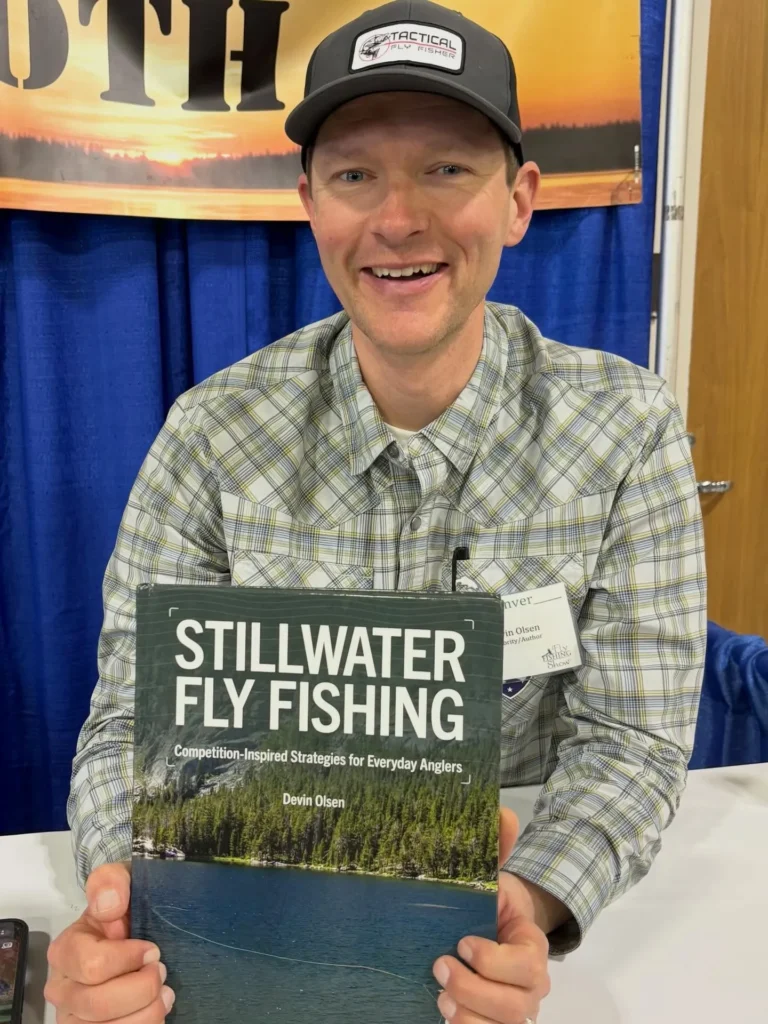
Devin says there’s no single approach that works every time. In his Stillwater Fly Fishing book, he explains that wind, water temperature, hatches, and trout behavior all shape how you should fish a lake. That’s why two anglers can catch the same number of fish using completely different methods.
The key, he says, is understanding the conditions and choosing the right approach for the day.
Loch Style Fishing
(09:55) One of the main techniques Team USA uses is loch-style fishing, where the boat drifts broadside to the wind with a drogue slowing its drift.
Cody says the biggest advantage is being able to cover fresh water and constantly present flies to new fish. Instead of casting to the same spot over and over, you’re always fishing trout that haven’t seen your flies yet.
That doesn’t mean it’s always the best choice. If fish are concentrated around one area or feeding deep during a hatch, anchoring can be more effective. The real key, Cody says, is being comfortable with a wide range of techniques so you can adapt to whatever the lake gives you.
How Do Team USA Anglers Break Down a New Lake?
(23:34) Trout don’t always stay in the same part of the lake.
Devin says they might be feeding in three feet of water one hour, then suspend 20 to 25 feet deep later in the day. That’s why he carries around 27 fly lines in the boat. Different lines let him cover different depths, sink rates, and wind conditions. In his Stillwater Fly Fishing book, he even shares sink-rate testing that showed some fly lines don’t sink as fast as their packaging claims.
When Team USA arrives at a new lake, they don’t all fish the same way. Instead, they spread out their approach.
- One angler starts shallow while another fishes deeper.
- They compare notes to quickly narrow down where trout are holding.
- Once they find the right depth, they fine-tune retrieves and fly patterns.
Cody says you don’t need that many fly lines to catch fish. A floating line, heavier flies, and longer countdowns can still help you work through the water column. The key is having a system and letting the fish tell you where they are.

Finding Trout in a New Lake
(31:30) When Devin fishes a new lake, he doesn’t try to match a hatch right away.
Instead, he starts with attractor patterns like buggers and fishes multiple depths at once. Once he figures out where trout are holding, he adjusts his fly line, fly weight, and retrieve to keep his flies in that zone.
Cody says preparation starts before you even launch the boat. He recommends checking:
- Depth maps or lake contours
- Stocking reports
- Local hatches and food sources
- Recent fishing reports
He says there are very few absolutes in lake fly fishing, but doing a little homework gives you a much better starting point.
How Does Trout Behavior Change Throughout the Day?
(37:19) Devin says one of the biggest keys to lake fly fishing is understanding trout biology.
He pays close attention to water temperature, wind, sunlight, and surface conditions because they all influence where trout hold and how willing they are to chase a fly. On calm days, slower presentations often work best. When the wind picks up, trout are usually more willing to chase faster-moving flies.
He also shares a helpful guideline for water temperatures:
- Around 68°F and above, trout begin to experience stress.
- 53 to 62°F is the sweet spot for trout activity.
How Do Changing Conditions Affect Your Presentation?
Conditions can change throughout the day, and Devin adjusts with them.
- Calm water usually calls for slower presentations.
- Wind and surface chop often make trout more willing to chase moving flies.
- Morning and evening fish tend to hold shallower before sliding deeper as the sun gets higher.
Rather than sticking to one technique, he lets the conditions tell him how the fish are likely to behave.
Team USA Gear for Lake Fly Fishing
(47:56) Cody recommends keeping it simple with a 9- to 10-foot rod in a 5-, 6-, or 7-weight, with a 6-weight being his favorite all-around choice. Devin also fishes 9½- and 10-foot rods and says shorter rods have been easier on his arm while recovering from tendonitis.
Some of the gear they recommend includes:
- Echo Stillwater Series
- Sage R8
- Thomas & Thomas Avantt
- Hardy and Orvis cassette reels for carrying multiple fly lines
They also suggest starting with just four fly lines (a floating line, an intermediate, a Type III or V, and a Type VII) before adding specialty lines. They finish by sharing a simple level-leader setup that allows quick line changes and helps improve sink rate and strike detection
Connect with our Guests
You can find Devin and Cody on Instagram @tactical_flyfisher and @burgdorff_angling
And Team USA @flyfishingteamusa
YouTube at Tactical Fly Fisher
Visit Team USA’s website at FlyFishingTeamUSA.com
This episode is brought to you by Yellowstone Teton Territory. Make sure to check them out when visiting Idaho.