

Some fly-tying skills come quickly. Others only show up after thousands of flies, years behind the vise, and a lot of mistakes along the way. Proportions, thread control, and material handling are things you really can’t shortcut.
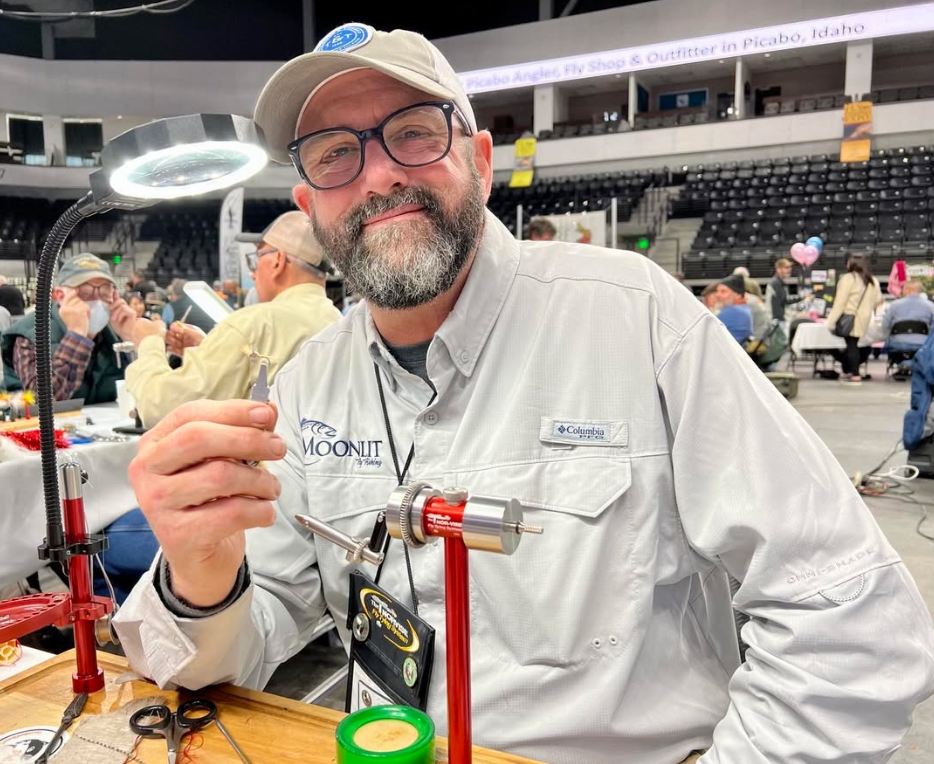
In this episode, I sat down with Dave Allison to talk about fly tying travel, the expo circuit across the West, and the patterns he loves tying when people sit down across the table. We also dug into the East Idaho Fly Tying Expo, one of the best tying events in the country.
Dave shared some great insights into dry flies, Quigley patterns, Wally Wings, the Found Link, and the small tricks that make a big difference when you’re tying or fishing these flies.


Find the show: Follow the Show | Overcast | Spotify
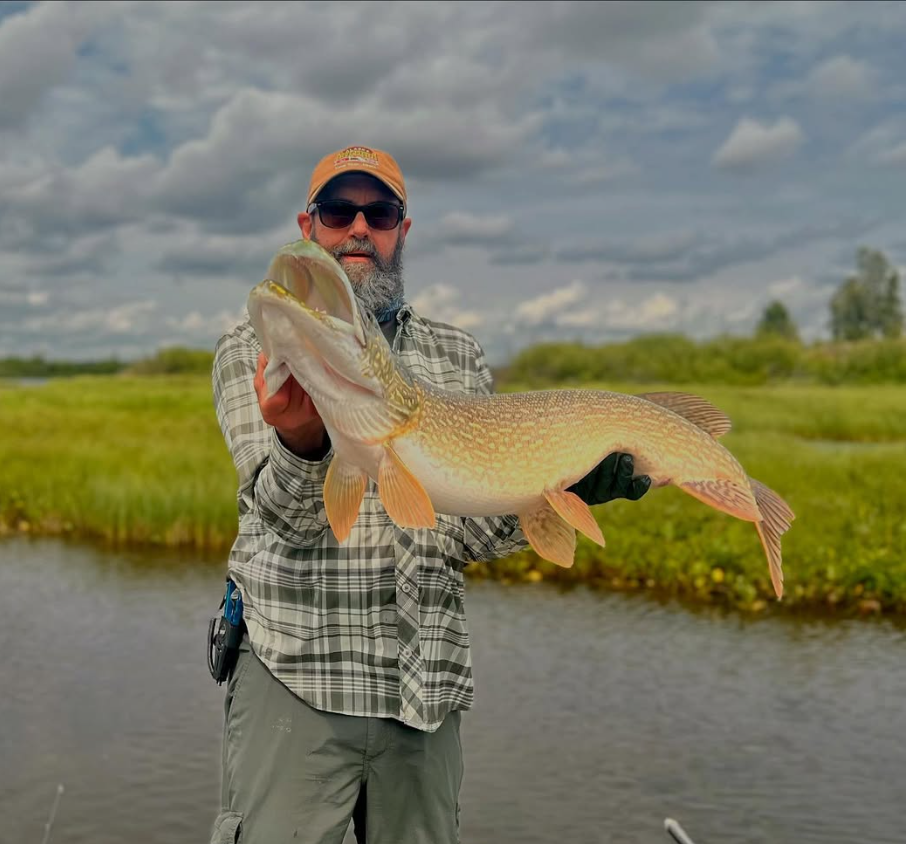
Show Notes with Dave Allison on Fly Tying Travel
The Fly Tying Show Circuit Across the West (00:01:46)
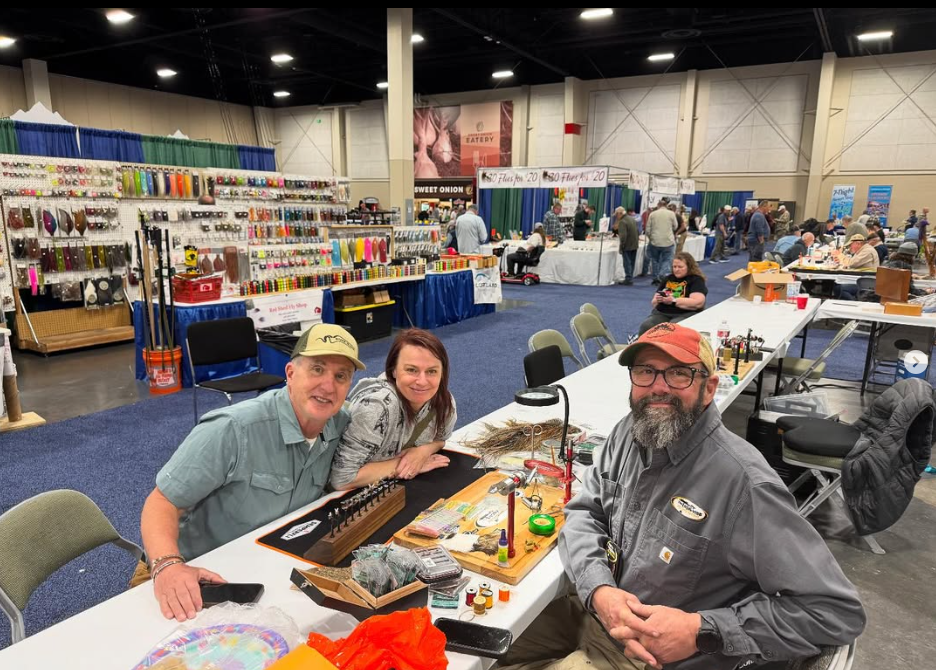
Dave ties at several shows each year, including Albany, Boise, Bellevue, and the East Idaho Fly Tying Expo. These events bring together fly tyers and anglers who want to sit down, watch flies being tied, and ask questions.
One thing that makes the club-run expos different from larger commercial shows is the atmosphere. Instead of standing in aisles like a trade show, people often sit across from a tyer and spend time learning techniques and talking about fishing.
Dave mentioned he often ties around 50 flies per day at these events, and most of them end up going home with anglers who stop to watch.
Dry Flies Dave Allison Demonstrates at Shows (00:03:14)
Dave focuses heavily on dry flies, but when he ties at shows he often demonstrates patterns that highlight specific techniques. Instead of tying the most common flies anglers already know, he prefers patterns that allow him to teach material handling and proportions.
Several patterns came up during the conversation, including Quigley flies, Wally Wings, and the Found Link. These flies give him a chance to demonstrate wing construction, thread control, and hackle techniques.
The goal is not just to show a finished fly, but to help anglers understand the small details that make dry flies work.
Quigley Patterns and the Film Critic (00:05:24)
Bob Quigley’s patterns were a big part of the conversation. Dave talked about how well-engineered these flies are, particularly the Quigley Cripple, Hackle Stacker, and Film Critic.
Each part of the fly serves a purpose. The tails, body materials, and wing structure all help create a natural emerger profile that trout recognize.
Dave also shared a modification he uses for the Hackle Stacker. Instead of creating the hackle loop from thread, he uses a visible post material. This makes the fly easier to see on the water while still maintaining the original design.
The Turkey Wally Wing (00:07:35)
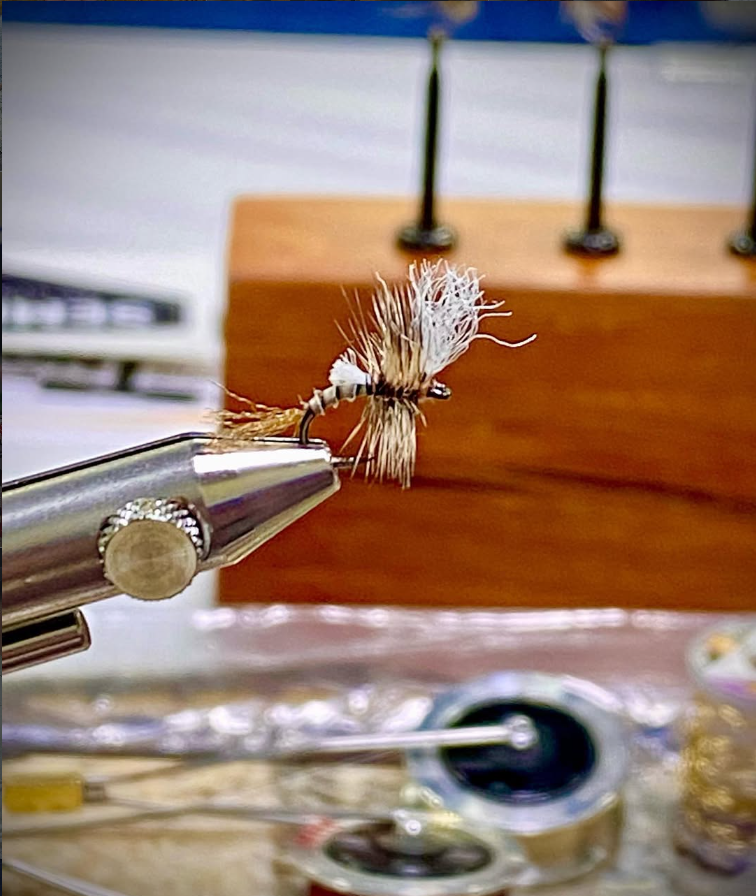
Dave also discussed the Wally Wing, a classic dry fly wing style made from matched feather tips. Traditionally these wings were tied with duck feathers, but Dave’s friend Paul Shurtliff modified the technique using turkey flats.
The turkey feather creates a stronger stem, which makes the wing much more durable when fishing. The original duck feather wings often broke after only one or two fish.
This simple material change turned a delicate display-style fly into something much more practical for fishing.
The Found Link Confidence Fly (00:12:21)
Another pattern Dave talked about was the Found Link, created by Kelly Galloup. The fly evolved from Mercer’s Missing Link but includes several changes that help it float better and imitate multiple insects.
The fly blends features from several dry fly styles and has become a confidence pattern for Dave on several rivers.https://www.youtube.com/embed/xvpWV0VSQmM?si=a7eLup8UPSNDdPDw
Tying for Shows vs Tying for Fishing (00:19:50)
Dave made an interesting distinction between tying flies for demonstrations and tying flies for fishing.
When he’s tying at shows, he takes extra time to make the flies look perfect so people can clearly see each step. When he’s tying flies for himself, the focus shifts more toward efficiency.
The fundamentals still matter, though. Good proportions, clean thread control, and leaving enough room behind the hook eye are key details that make flies easier to tie and fish.
Dry Fly Tying Tips from Dave (00:35:25)
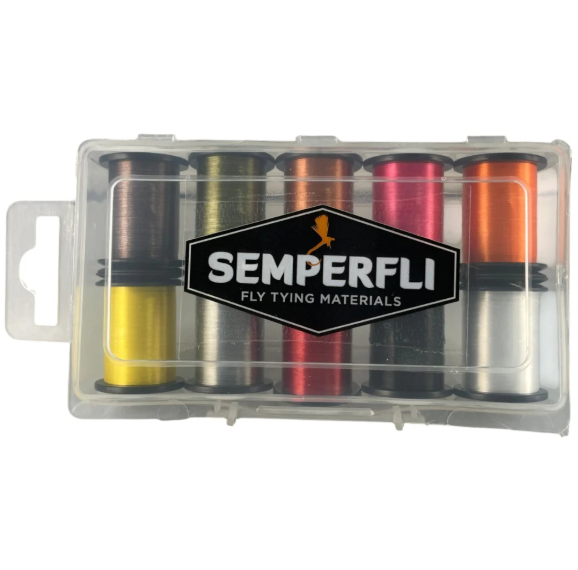
One of the biggest improvements in dry fly tying in recent years has been modern materials. Dave mentioned that ultra-fine threads like Nano Silk make it much easier to avoid bulky heads on small flies.
He also talked about kapok dubbing, which creates tight bodies that float well and are easy to apply.
One of his favorite tricks involves tying in hair wings. Instead of placing the hair directly on the hook, he gathers it with a wrap of thread in the air first. This helps prevent the hair from rolling around the hook shank when it’s tied down.
- Semperfli Nano Silk
Influences in Fly Tying (00:30:04)
Dave talked about several people who influenced his tying journey. One of the biggest inspirations early on was Davey McPhail, whose clean tying style made a big impression.
He also mentioned Curtis Fry and Cheech Pierce from Fly Fish Food, along with Tim Flagler, who have helped educate a new generation of fly tyers through videos and demonstrations.
The Nor-Vise and Norm Norlander (00:39:27)
Dave has been tying on a Nor-Vise for many years and began using it when Norm Norlander was still running the company.
While Norm was known for demonstrating fast spinning techniques, Dave uses the vise more like a traditional vise. One tool he still relies on heavily is the Nor-Vise automatic bobbin, which helps maintain thread tension.
Confidence Dry Flies for the West (00:48:52)
Toward the end of the episode, we talked about simple dry flies that consistently produce fish across Western rivers.
Patterns like the Found Link, Purple Haze, Stimulator, and Elk Hair Caddis came up in the conversation. These flies may not match a specific hatch perfectly, but they float well and work in many situations.
You can find Dave Allison on Instagram.
Conclusion with Dave Allison on Fly Tying Travel
This conversation with Dave Allison highlighted how much fly-tying knowledge comes from experience and time at the vise. The little tricks and adjustments he shared can make a big difference when tying dry flies.
If you ever get the chance to visit the East Idaho Fly Tying Expo, it’s worth stopping by Dave’s table to watch a few flies come together and ask a few questions.