

Michelle Edwards is a fly tyer and former guide who spent years fishing and guiding the South Fork of the Snake. We get into South Fork hatches, guide flies, nymphing from a drift boat, streamer fishing for bigger trout, and the lessons Michelle carried with her from Colorado to Idaho.


Find the show: Follow the Show | Overcast | Spotify
Show Notes with Michelle Edwards on South Fork Snake River Fly Fishing
About Michelle Edwards
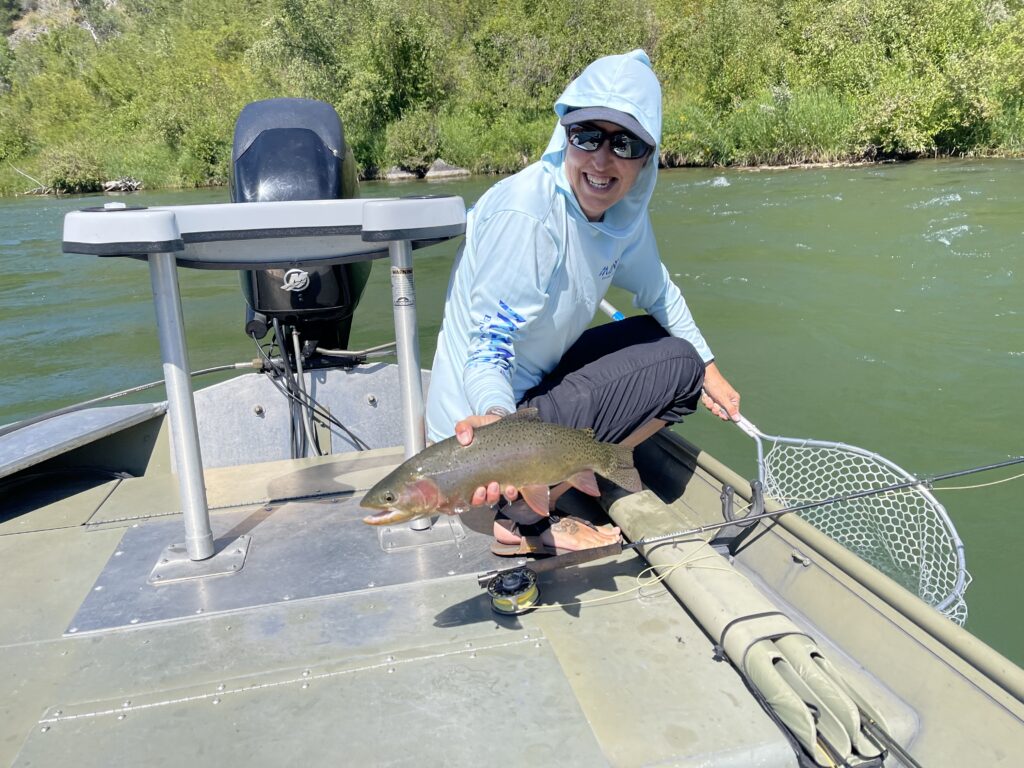
Michelle Edwards started fly fishing around 2008 after taking a course with the Colorado Mountain Club. She went on to guide through the Blue Quill Angler in Colorado before moving to Idaho and guiding the South Fork of the Snake.
Her experience on pressured Colorado tailwaters gave her a strong foundation in nymphing, line management, and teaching beginners. On the South Fork, she added drift-boat fishing, dry droppers, streamer tactics, and western stonefly hatches to that toolbox.
Today, Michelle isn’t guiding full time, which gives her more room to fish and tie for herself. She continues exploring the waters around Idaho and tying everything from South Fork trout patterns to streamers and carp flies.
South Fork Hatches and Dry Dropper Fishing
The South Fork changes dramatically through the season. Winter flows can drop to roughly 800 or 900 CFS, while flows around the salmon fly hatch can climb toward 19,000 CFS, with Michelle calling roughly 15,000 a nice level during that period.
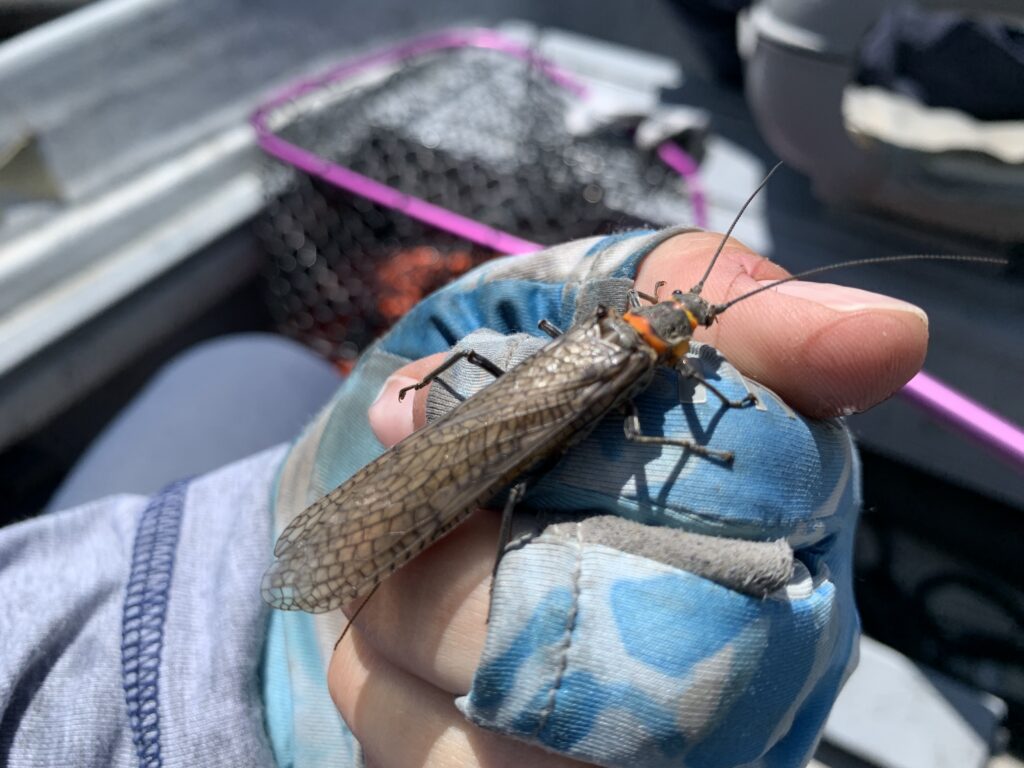
The salmonflies usually arrive around the first week of July, although timing can move about a week in either direction. Golden stones follow in the mix, and the river also gets mutant stones around late August into September.
South Fork hatch notes:
- Salmonflies: usually around the first week of July
- Golden stones: summer
- Mutant stones: late August into September
- Salmonfly-style Chubby Chernobyl
- Henry’s Fork Stone
Once the salmonflies get going, Michelle says trout begin looking up and dry-dropper fishing becomes a strong option through much of the season. She focuses on banks, inside corners, drop-offs, side channels, and anywhere trout can find a softer cushion away from the heavy current.
From Colorado Tailwaters to Guiding in Idaho
Michelle started fly fishing around 2008 after taking a month-long class through the Colorado Mountain Club. She eventually left her job with the Department of Veterans Affairs and started guiding with the Blue Quill Angler in Evergreen, Colorado.
Kerry Carragher helped Michelle develop as a guide, and those years on technical Colorado water gave her a strong nymphing foundation. When the pandemic arrived, increasing costs and crowded rivers helped push her toward Idaho, where she found fewer anglers and a lot more water to explore.
Michelle later guided out of the Lodge at Palisades Creek on the South Fork. She eventually stepped away from full-time guiding because the long days and extended stretches of work became harder to sustain, but she still fishes the river regularly.
Simple Guide Flies That Catch South Fork Trout
Michelle likes guide flies for exactly the reason you would expect: they are simple, durable, and they catch fish. Rather than completely reinventing proven patterns, she often changes a color or another small detail to give trout something a little different.
One example is her variation on a foam Circus Peanut-style dry from Will Dornan. She uses colors that can work well during golden stone season, and the big foam profile also makes it useful as the top fly in a dry-dropper rig.
Michelle’s South Fork fly box includes:
- Circus Peanut-style foam dry
- Chubby Chernobyl
- Paragon-style patterns
- CDC blue-winged olive patterns
- Rubber Legs
- Coffee-and-black Rubber Legs
- Orange-and-black Rubber Legs
One big difference from Michelle’s Colorado days is fly size. On pressured Colorado tailwaters she might have needed size 22 or 24 flies, while on the South Fork a size 16 or 18 can feel small.
The 90-Degree Nymphing Setup
Michelle’s boat nymphing system is built around creating a 90-degree connection beneath the indicator. She starts with a heavier butt section, around 20-pound material, runs that to the indicator, and then has the tippet dropping essentially straight down.
She likes Oros indicators and usually runs roughly three-and-a-half to four feet below the indicator depending on the water. A loop connection, tippet ring, or small swivel can help create the 90-degree transition.
Basic 90-degree setup:
- Heavy butt section, roughly 20-pound
- Oros indicator
- Loop, tippet ring, or small swivel
- 3X or 4X tippet
- Heavy tungsten nymph
- Second fly roughly eight inches away when appropriate
Michelle generally skips split shot because the heavy flies break through the surface and get down on their own. She feels the 90-degree system makes depth easier to control and helps keep the flies fishing at a consistent level.
From the boat, the rower can also help extend the drift. Michelle wants those flies fishing as long as possible, particularly along banks, drop-offs, and inside seams.
Two Flies, Better Drifts, and Line Management
Idaho regulations can allow three flies in the situations Michelle discusses, but she generally sticks with two, especially while guiding. More flies mean more opportunities for tangles, and simplicity matters when you’re helping anglers get comfortable quickly.
A Rubber Legs makes a good heavy top fly, followed by something smaller. Michelle says you can reverse that arrangement or put a smaller fly on a tag, but the important part is creating a setup the angler can actually cast and control.
For beginners, Michelle keeps casting simple:
- Use an open loop
- Pick up and lay down
- Avoid unnecessary false casts
- Mend after the cast
- Keep excess line off the water
- Don’t cast farther than you can effectively manage
Michelle calls fly fishing largely a game of line management. Too much line on the water creates problems with conflicting currents, hook sets, and drag, so she keeps the boat close enough to the bank that anglers don’t need to throw hero casts.
Her approach borrows from tightline nymphing without requiring a dedicated Euro setup. The goal is simply to keep unnecessary fly line off the water and make a clean drift easier to achieve.
Streamer Fishing for Bigger South Fork Trout
The South Fork is generally divided into four guiding sections, and Michelle says a two-foot trout can turn up in any of them. The upper river and section four have reputations for larger fish, but she has found big trout in places that might otherwise get overlooked.
Streamer fishing helped her learn where some of those fish lived. She recalls a client catching a 25-inch brown just below a ramp in section one, which is a good reminder that big trout don’t always follow the script.
Michelle’s own Peanut Envy variation uses black marabou with copper UV Polar Chenille. She wants streamers that remain relatively easy to cast because fishing from the boat involves repeatedly hitting the bank, making a couple of strips, picking up, and firing the next cast.
South Fork streamer patterns Michelle mentions:
- Peanut Envy
- Dungeon
- Circus Peanut
- Rusty Trombone
- Goldie
- Black marabou
- Copper UV Polar Chenille
Heavy rabbit-strip flies can start feeling like casting a wet sock over a 10- or 12-mile float. Michelle instead likes a streamer-tip line with roughly 10 to 15 feet of sinking section and enough floating line behind it to make repeated casts manageable.
For the rod, Michelle favors a 7-weight when larger trout and strong current are in play. A 6-weight can work, but she has seen a big brown bend one all the way into the cork.
Fly Tying, Carp, and Learning the Fundamentals
Michelle tied streamers and carp flies at the East Idaho Fly Tying Expo, choosing patterns that were a little different from the dry flies people might expect to see. In previous years she has also tied trout spey flies, and she likes using these events as an opportunity to learn tricks from other tyers.
For someone starting out, Michelle recommends taking advantage of hands-on beginner classes at fly shops. She also points to Charlie Craven’s beginner fly-tying material because the step-by-step approach lets one skill build on another.
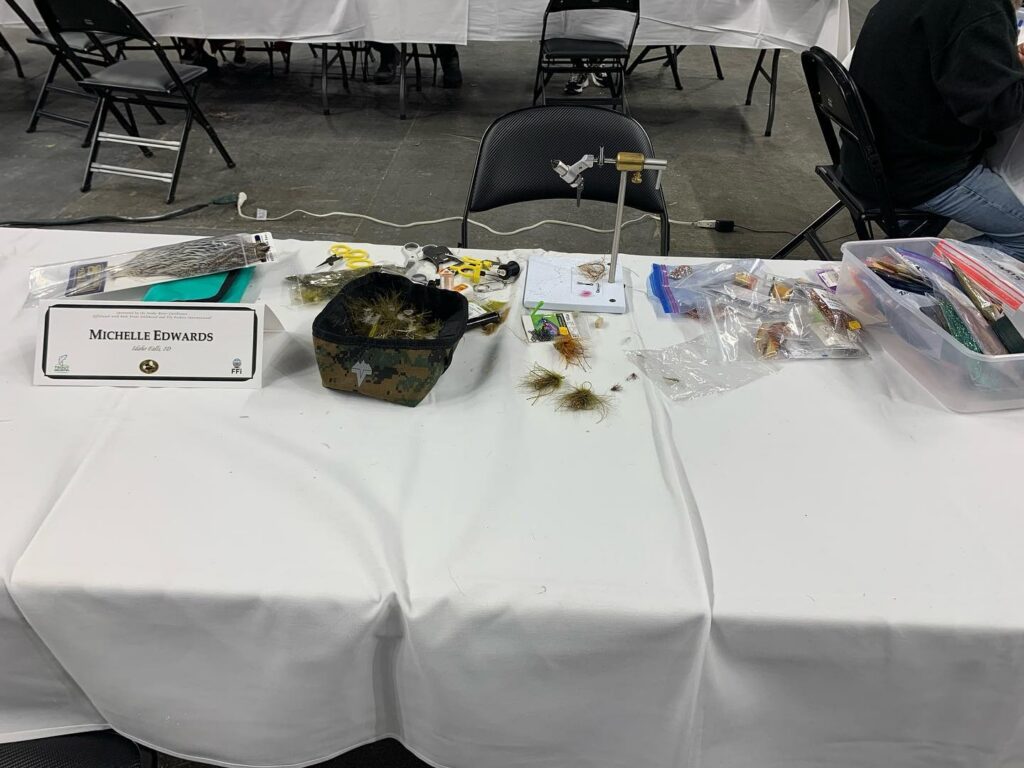
She also tied a Carp Bitter-style fly at the expo. Carp are available on the main Snake and in nearby reservoirs, giving Michelle another reason to keep experimenting beyond the trout patterns she spent years tying as a guide.
If Michelle had to narrow everything down to one versatile fly, the Woolly Bugger would be near the top of the list, with a Rubber Legs right there as another contender.
Saltwater Travel and What’s Next
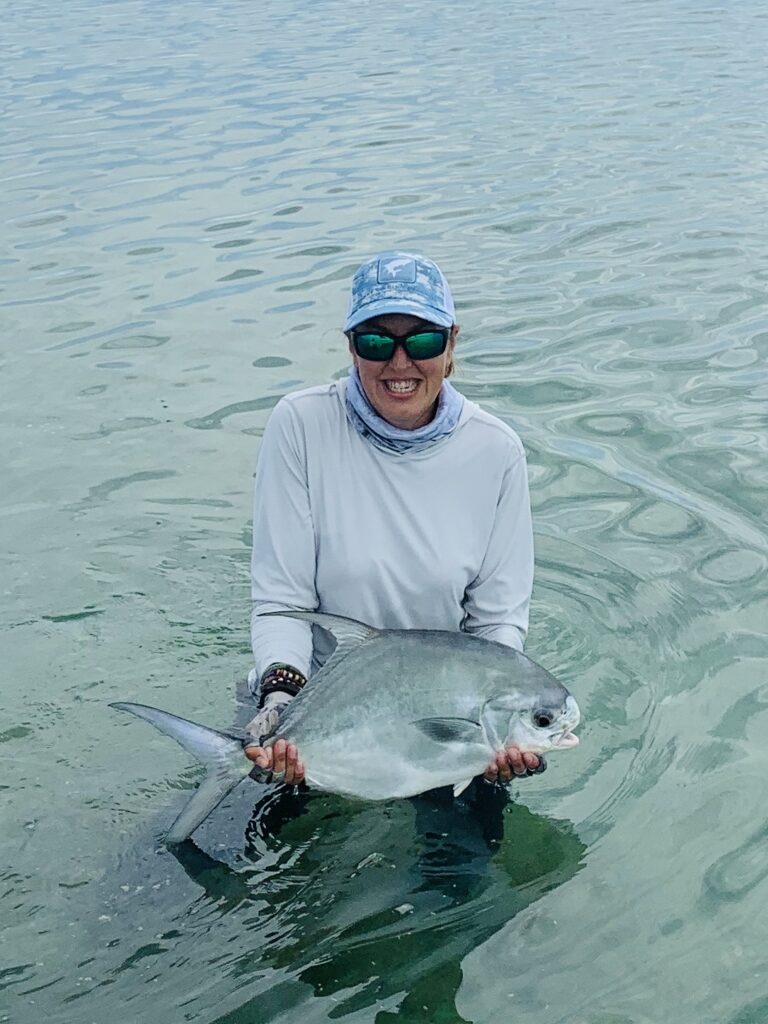
Even with all the water around Idaho, Michelle would like to get back to saltwater fishing. She’s made trips to Mexico, the Bahamas, and the Gulf Coast, and landed her first permit on her second saltwater trip.
If she had to choose one saltwater destination from her experience, the Everglades would be high on the list because of the variety. Tarpon and redfish are both part of the appeal, while the Bahamas remains a standout option for bonefish.
One of Michelle’s favorite parts of traveling is how small the fly-fishing world becomes. Even as an introvert, she has found that anglers have a way of connecting, showing each other around, and opening doors to new water.
Connect with Michelle Edwards
Instagram: @slackwaterrepublic1
This episode is brought to you by Yellowstone Teton Territory. Make sure to check them out when visiting Idaho.