


The greatest fly patterns don’t just catch fish, they stand the test of time and become part of fly fishing history.
Fly tyer and author Al Ritt shares the stories behind his book, 25 Best Most Versatile Flies, and some of the most useful patterns in fly fishing. We explore classics including the Adams, Pheasant Tail, Hare’s Ear, Royal Wulff, and Clouser Minnow.
We explore Al’s long history in fly tying, the East Idaho Fly Tying Expo, his own fly patterns, and his approach to teaching beginners and learning the techniques behind fly tying.


Find the show: Follow the Show | Overcast | Spotify
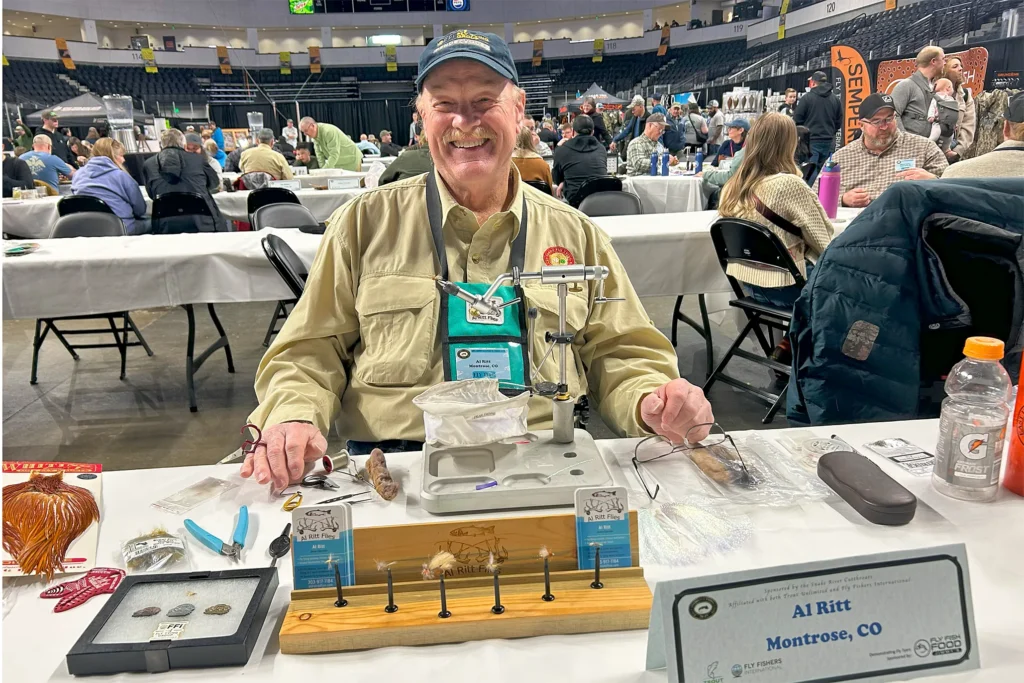
Show Notes with Al Ritt on 25 Best Most Versatile Flies
Some fly patterns stand the test of time because they simply keep catching fish. Al Ritt has spent decades studying what makes these flies so effective across species, waters, and fishing situations. In this episode, we explore the history behind the 25 Best Most Versatile Flies, uncover the techniques and ideas that make them so effective, and hear Al’s advice for becoming a better fly tyer through practice, precision, and a deeper understanding of the craft.
The East Idaho Fly Tying Expo and Al Ritt’s 25 Best Most Versatile Flies
(01:21) Al has been traveling to fly tying shows for years, including Denver, Pleasanton, Idaho Falls, and the Bug Roundup in Arkansas, while still finding time to fish when he can. We also talk about the East Idaho Fly Tying Expo, a consistently well-organized show that brings in some of the best tyers.
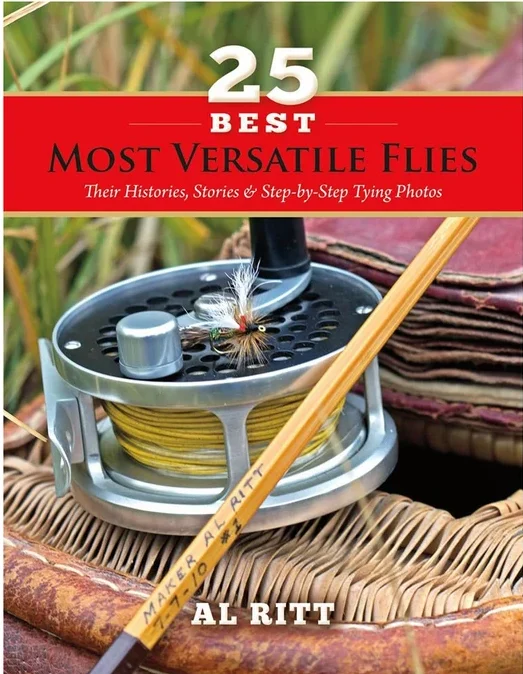
Al’s book, 25 Best Most Versatile Flies, features 87 flies across 25 chapters. Each chapter focuses on an influential, versatile pattern and related flies that developed from it or evolved independently into similar designs. Al explains that versatility can mean different tying methods, target species, water conditions, or the influence a pattern has had on other successful flies.
The book goes beyond tying recipes, exploring the history and development of each fly, where it came from, how it can be used, and ways to modify it. The patterns cover a wide range of fishing, from panfish and trout to larger freshwater and saltwater species.
The Origins and Evolution of the Hare’s Ear, Pheasant Tail, and Adams
(05:45) The history of the Hare’s Ear isn’t completely settled. Al’s research suggests it originated in the United Kingdom and may have originally been developed as a dry fly before becoming best known as a nymph. The Parachute Hare’s Ear is one example of how the pattern has evolved over time.
The Pheasant Tail traces back to a riverkeeper in the UK. The original pattern used only pheasant tail and copper wire, with the wire securing the materials while forming the rib and other parts of the fly. Frank Sawyer created the pattern, while the American version later added thread, peacock herl, and a wing case.
The Adams was developed in Northern Michigan by fly tyer and guide Halliday after customer Bud Adams described a hatch on a local pond. Adams returned the next day and reported that the new fly had worked well, so Halliday named it after him. The pattern later evolved with changes to the wing and tail, leading to familiar variations such as the Parachute Adams.
The Evolution of the Royal Wulff and Clouser Minnow
(09:57) The Royal Wulff is commonly credited to Lee Wulff and evolved from the older Royal Coachman, which itself evolved from earlier patterns including the Lead Wing Coachman. The Royal Coachman began as a wet fly before developing into a streamer and dry fly. Al believes Dan Bailey played a major role in making the Royal Wulff popular in the West.
Dave mentions a Royal Coachman Bucktail he had tied for steelhead with a traditional white calf-tail wing. Al has also seen Royal Coachman patterns fished as steelhead streamers and believes the fly could work for Atlantic salmon. The discussion highlights how classic patterns can evolve beyond their original purpose as tiers experiment.
“You just need to think out of the box.”
The Clouser Minnow has a more recent history. When Bob Clouser developed the pattern, lead eyes weren’t available, so he used a split-shot sinker crimped onto the hook. When Wapsi introduced its first lead eyes, Al understands they were developed specifically with the Clouser Minnow in mind. The pattern went on to become one of the most versatile and widely used flies in fly fishing.
Watch the Clouser Minnow – Fly Tying Tutorial by Bob Clouser below.
Al Ritt’s Fly-Tying Journey and the East Idaho Fly Tying Expo
(13:50) Al lives in Montrose, Colorado, and the East Idaho Fly Tying Expo has been a regular stop for him for nearly 20 years. A lot has changed over that time, including the venue, organizers, and some of the longtime tyers, but the heart of the show is still the same: bring a big group of fly tyers together, with workshops and vendors mixed in.
The first year Al attended, there were 144 tyers. This year there were still well over 100. We also compare East Idaho with other shows like the former Fly Fishing Show in Newark, Sowbug Roundup, and the Denver Fly Fishing Show, where Al estimates there were around 60 to 75 tyers.
What makes East Idaho different is that fly tying really is the main event. Al spent all three days tying on the demonstration floor this year. At other shows, he likes to switch up the patterns he’s tying so he’s not sitting there making the same flies for the same people year after year.
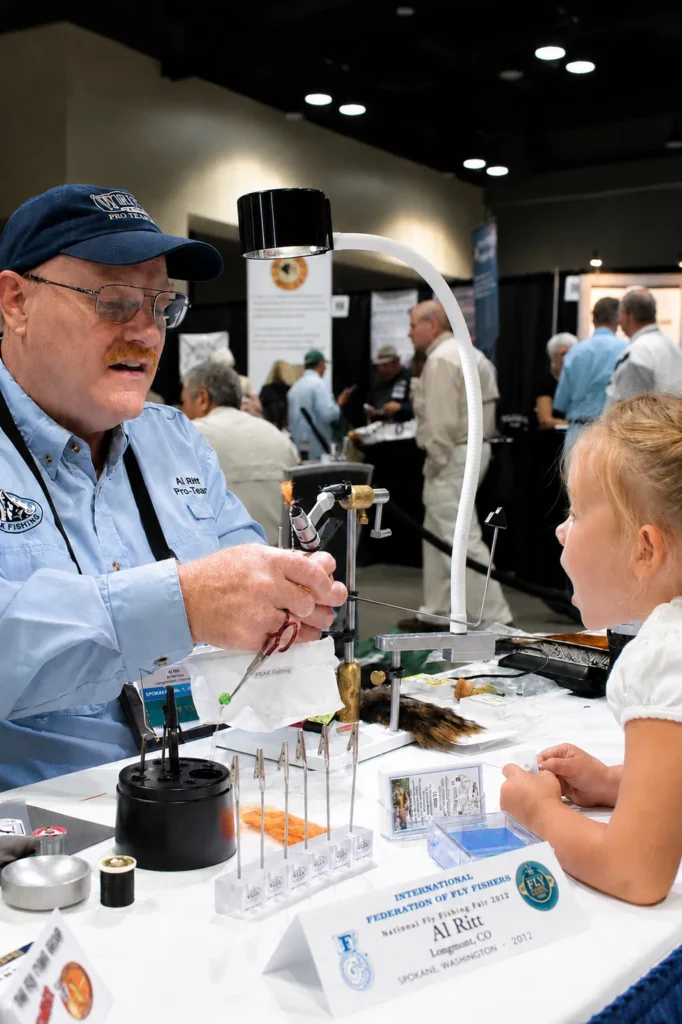
From Magazine Writing to a Book and Collecting Classic Fly Fishing Gear
(20:54) Al’s book came later in his fly tying career. Around 2010, he began writing for several magazines and eventually decided it would be interesting to put a book together. A publisher eventually approached him, making the publishing process much easier. From there, the book took about a year to complete.
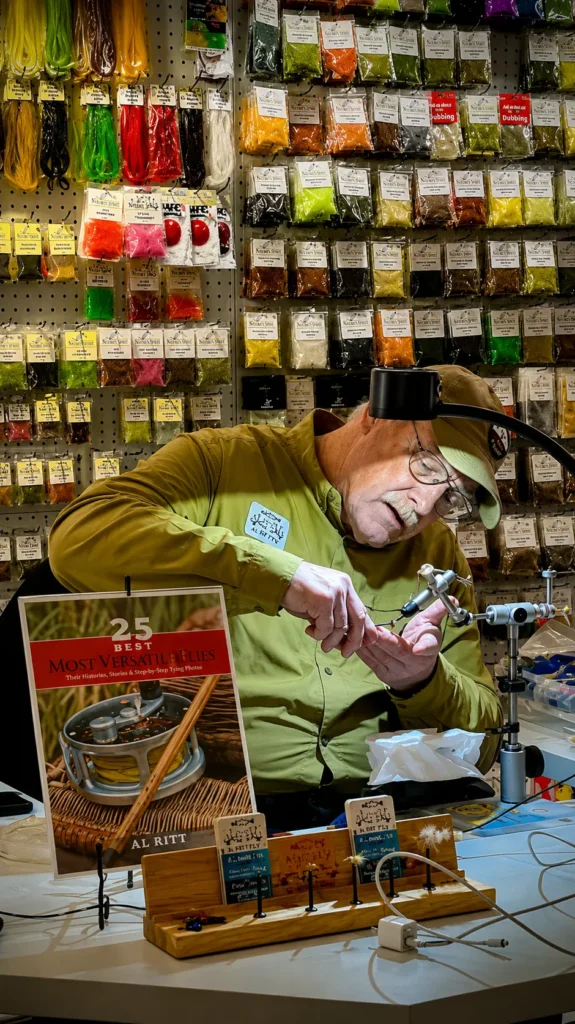
The photography required careful planning. Al needed the lighting, camera, and vise to remain in the same position for every step-by-step photo, so he set everything up at his dining room table and left it there until the book was finished. The cover features a Royal Wulff, a bamboo rod, and a classic Peerless reel.
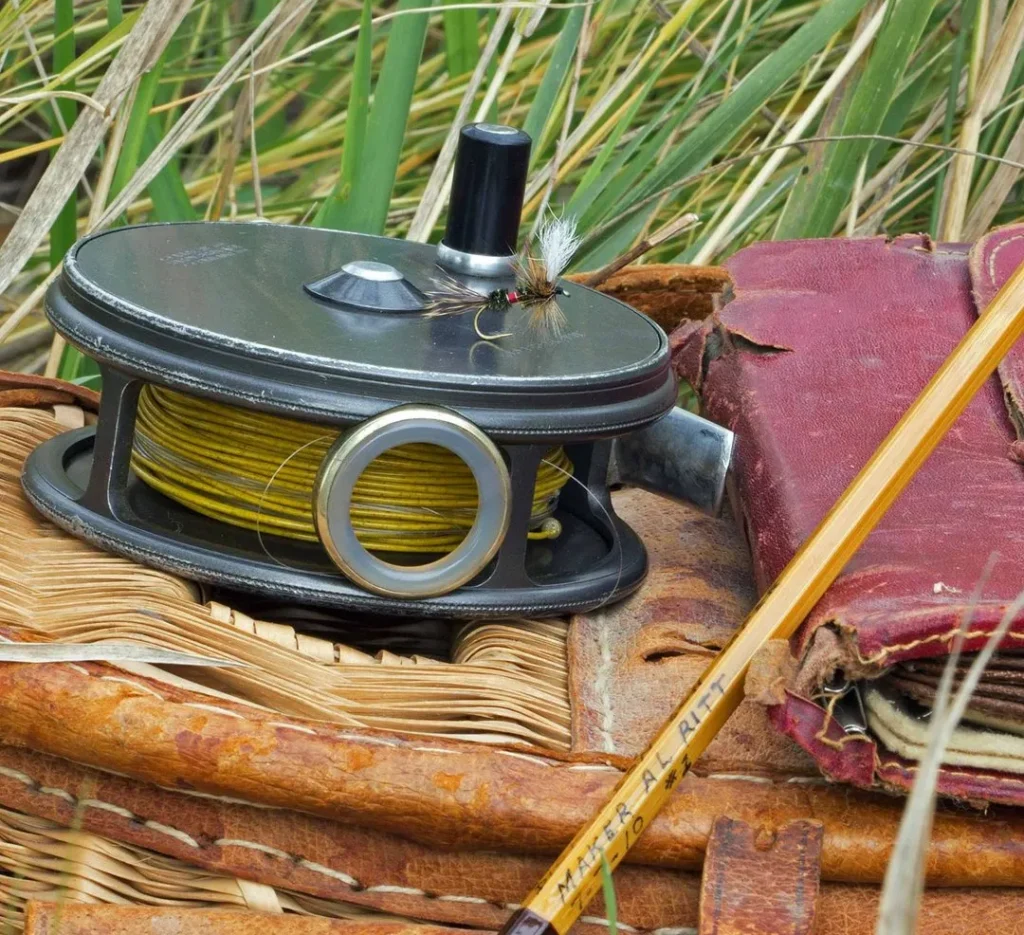
The publisher has since gone out of business, making the book harder to find. Al still has a number of copies himself, and interested readers can email him to see if they can arrange a purchase directly. Al also became interested in collecting classic fly fishing gear. He started collecting pieces over the years, but after moving to Montrose, Colorado, he found that he no longer had much room for it.
Al Ritt’s Own Versatile Patterns: Crayfish, PTs, and Midges
(23:29) We get into a few of Al’s own patterns, starting with the Ritt’s Fighting Crayfish, which he developed around 2002 or 2003 to better imitate how a real crayfish sits in the water. It’s caught everything from trout and bass to carp and bonefish, with foam claws keeping the head off the bottom and rubber legs adding movement. Al primarily fishes it in stillwater, adjusting his retrieve based on water temperature and fish activity.
His most-used fly is his ARF Tung-Syn PT, a synthetic take on the Pheasant Tail. Crystal flash beneath the body and translucent material over the top give it a reflective, three-dimensional look inspired by the translucency of natural insects.
Then there’s the ARF Midge Pupa, which uses a similar approach to light and translucency. Inspired partly by Michael Tucker’s work with Lava Lace tubing, Al developed a body using wire inside hollow tubing. He can adapt the pattern to imitate different stages of a midge, from a worm or larva to a pupa, adding details like breathing filaments, a bead, thorax, or wing bud depending on what he’s trying to match.
Elegant Dry Flies, Bob Quigley’s Techniques, and Natural vs. Synthetic Materials
(34:43) Al’s fly choices depend on the region, crowd, theme, or simply what he’s in the mood to tie. This year’s theme was elegant dry flies, featuring the Gordon Quill, Cross Special, and a pair-loop Adams.
We explore the pair-loop technique developed by Northern California tyer Bob Quigley and his Film Critic, including how Klinkhammer and straight-shank hooks create different insect profiles.
Al also compares natural and synthetic materials, from Quigley’s monofilament post to his preference for softer high-vis materials.
Learning to Tie: Build Techniques, Muscle Memory, and Consistency
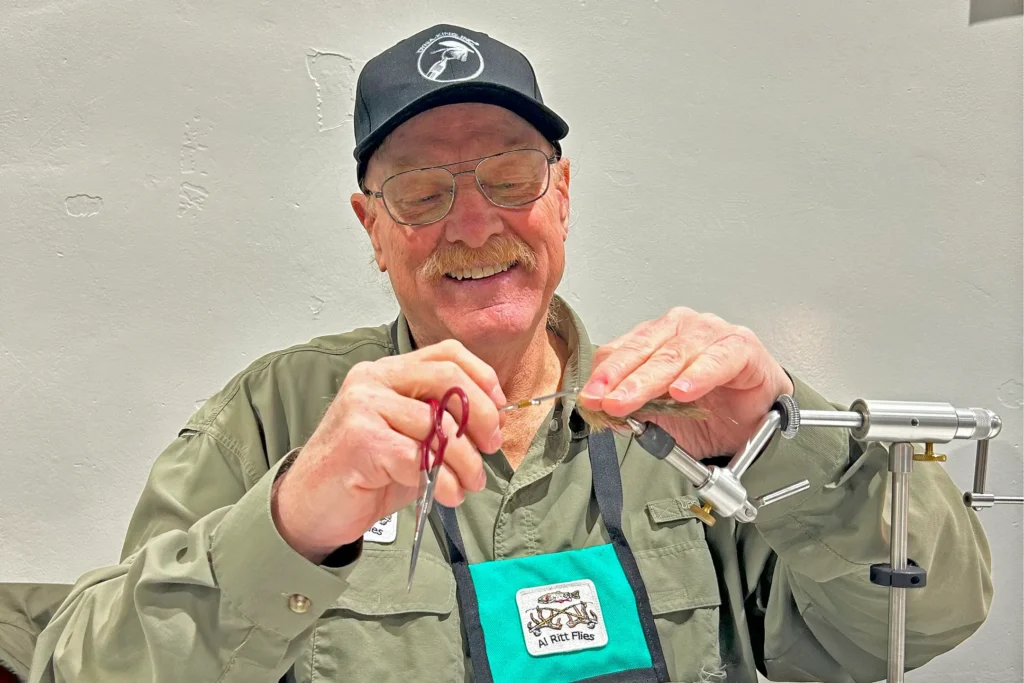
(48:56) Al learned from fly-tying legends like Sylvester Nemes, George Anderson, Dave Whitlock, Gary LaFontaine, and Jack Dennis. Nemes, whom Al considers the father of U.S. soft-hackle tying, remains a major influence. Al still fishes soft hackles as droppers or on a two-handed rod.
His biggest advice for learning to tie is simple: keep tying. Consistency builds muscle memory, while long breaks make the process harder. As Al puts it,
“If you focus on the how you got there and learn those basics, you can create any pattern.”
He also believes beginners should focus on techniques rather than memorizing patterns, starting with basic tools, materials, thread control, and simple flies like the Zebra Midge, Fitzsimmons Midge Adult, Woolly Bugger before gradually adding new techniques.
Tips for Successful Fly Tying
- Experiment: Don’t be afraid to modify existing patterns. Adding personal touches can lead to innovative and effective flies.
- Research: Understanding the history of a fly can give insights into its effectiveness. Look into its development and variations.
- Practice: The more you tie, the better you’ll get. Engage with the fly tying community to share techniques and learn from others.
Watch Al Ritt tie a fly in this Instagram Reel from @westernanglersflyshop
The Vises, Shows, and Al Ritt’s Current Fly-Tying Life
(58:23) Al started tying on a Thompson Model A, a vise many tiers were using at the time. A few years later, a shop owner convinced him to try a rotary vise, so he picked up a Renzetti Presentation, which he still owns and uses today.
About 20 years ago, Al started working with PEAK Fishing and spent a lot of time tying on the Peak vise. He says he’s been using the same one for roughly 25 years, a good reminder that quality tying equipment can last a long time.
These days, Al works part time with Mayfly Outdoors and is on the company’s pro team, where he ties on a Dyna King Barracuda. He also works part time at Montrose Anglers.
When preparing for a show or shop demonstration, Al starts at least a day and a half ahead. He chooses patterns, prepares recipe sheets, ties samples, and organizes materials, keeping each fly’s materials together in a labeled Ziploc bag.
About Al Ritt
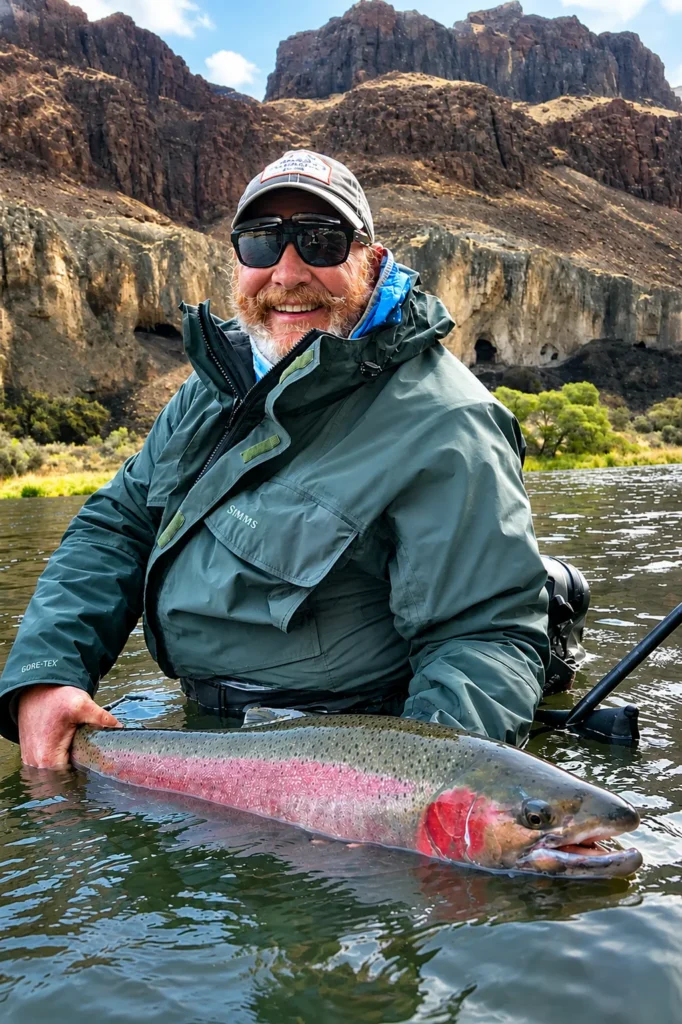
Al Ritt is a longtime fly tyer, instructor, writer, and author based in Montrose, Colorado. His work has included fly-tying editor roles with Fly Fusion and Fly Fishing & Tying Journal, along with regular contributions to Fly Tyer magazine.
Al has tied and taught across a wide range of fly-fishing styles, including trout, bass and warmwater fishing, Pacific salmon, steelhead, and saltwater. His book, 25 Best Most Versatile Flies, features 87 fly patterns with step-by-step photographs and written instructions.
Connect with Al Ritt
Email: [email protected]
Website: https://alrittflies.com/
Facebook: https://www.facebook.com/ARFlies/
Instagram: https://www.instagram.com/arflies/
This episode is brought to you by Yellowstone Teton Territory. Make sure to check them out when visiting Idaho.