
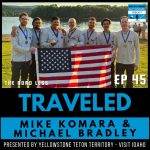

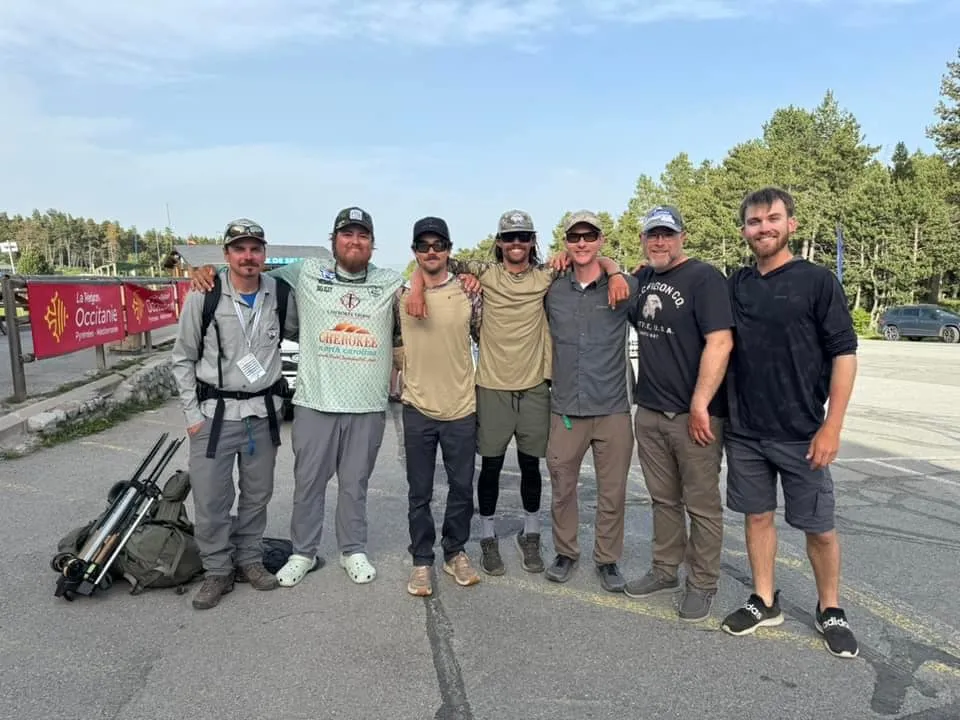
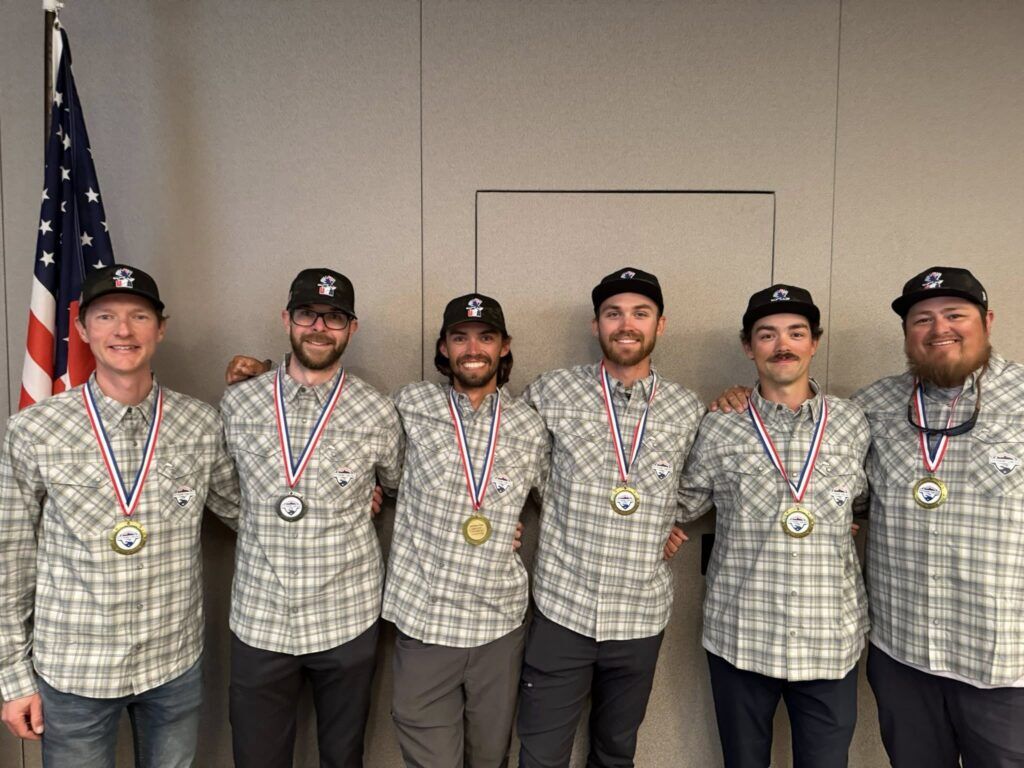
Mike and Michael are two of the five starters representing Team USA at the upcoming World Fly Fishing Championships in Eastern Idaho. They’ve spent years refining modern Euro nymphing tactics, and this episode digs into one of the biggest changes in competitive fly fishing over the last decade: the move from traditional sighter systems to fully colored micro leaders.
The discussion also covers team strategy, competition preparation, dry-dropper adjustments, minimalist gear systems, and how presentation often matters more than the fly itself.
Find the show: Follow the Show | Overcast | Spotify


Show Notes with Mike Komara and Michael Bradley on Micro Leaders and Euro Nymphing
About Mike Komara and Michael Bradley
Mike Komara is a Pennsylvania-based guide and competitive angler representing Team USA at the World Fly Fishing Championships. He’s known for his technical Euro nymphing approach, minimalist competition style, and teaching-focused guiding work through Innovative Angling.
Michael Bradley is based in North Carolina and fishes under the Fly Fish Cherokee brand. He brings a highly intuitive style to competitive fly fishing and has become known for simplifying fly selection, carrying minimal gear, and adapting quickly under changing conditions.
Preparing for the World Championships
Both anglers are heading into the championships with a little home-field confidence, although preparation looks different for each of them. Mike has been guiding nonstop leading into the event, while Michael admits he’s just starting to tie flies for the championship box.
One of the more interesting takeaways here is how few flies these guys actually rely on. Michael mentions that most of his confidence patterns are simple pheasant tail variations, while Mike jokes that he mainly fishes Walt’s worms, pheasant tails, and mops because they’re fast to tie.
What Micro leaders Actually Are
Mike explains that most micro leader systems are built around thin level monofilament roughly in the 5X range. In competition, anglers are restricted by FIPS rules, but outside competition he recommends anglers simply spool up 40 to 50 feet of thin colored mono instead of worrying about specialized Euro fly lines.
The major advantage isn’t just reduced diameter. The fully colored leader allows anglers to visually track the entire drift from fly line to tippet. That added visibility gives anglers far more information about depth, drag, and subtle strikes.
Micro leader materials discussed:
- Pierre Sempé colored mono
- Fluorescent leader waxes
- Neon paints for visibility sections
Why Competitors Moved Away from Traditional Sighters
Michael explains that many newer Euro anglers still begin with hand-tied sighters because they’re easier to understand initially. But at the highest level, most competitors have shifted toward fully colored micro leader systems.
Mike adds that many anglers still add a small contrasting painted section near the tippet connection to improve visibility in changing light conditions. That tiny adjustment helps track drifts more efficiently without needing a traditional multi-color sighter section.
Leader setup details:
- Roughly 16 feet total leader length
- 4–5 feet of tippet
- Usually single-fly rigs
- Double-fly rigs only when necessary
Single Fly vs Double Fly Rigs
One of the surprising takeaways is how often these competitors prefer fishing a single fly. While FIPS rules allow up to three flies in some waters, both anglers usually stick to one fly whenever possible.
The reason is simple: fewer tangles, faster rigging, and more efficient fishing under pressure. Mike notes that rebuilding complicated rigs after break-offs can waste valuable competition time.
Adjusting Leader Size for Wind, Fish Size, and Fly Weight
Both anglers adjust micro leader diameter based on conditions. Mike stays around 5X for most situations, but increases diameter when fishing larger fish or heavier tippet systems. Wind also becomes a huge factor.
Thinner micro leader can become extremely difficult in gusty conditions because they behave almost like airborne kite string. Heavier mono helps stabilize the system, although it reduces long-range control.
Michael points out that lighter leaders are especially effective with tiny flies and smaller trout in the 8–13 inch range.
Fishing Dry Droppers on Micro leaders
The dry-dropper conversation highlights how adaptable these systems can be. Michael shortens the leader slightly to create more depth between the dry fly and nymph, while Mike occasionally increases leader diameter for better casting in windy conditions.
Both anglers agree that pocket water is where dry-droppers really shine. In fast, broken currents, fish have less time to inspect flies and often react more aggressively. Mike also explains that truly fishing a single dry fly effectively usually requires switching back to a dedicated fly line setup.
Key dry-dropper adjustments:
- Slightly shorter leader
- More distance between dry and nymph
- Better in pocket water and broken currents
- Wind often dictates leader size
Euro Rods, Solid Tips, and Competition Setups
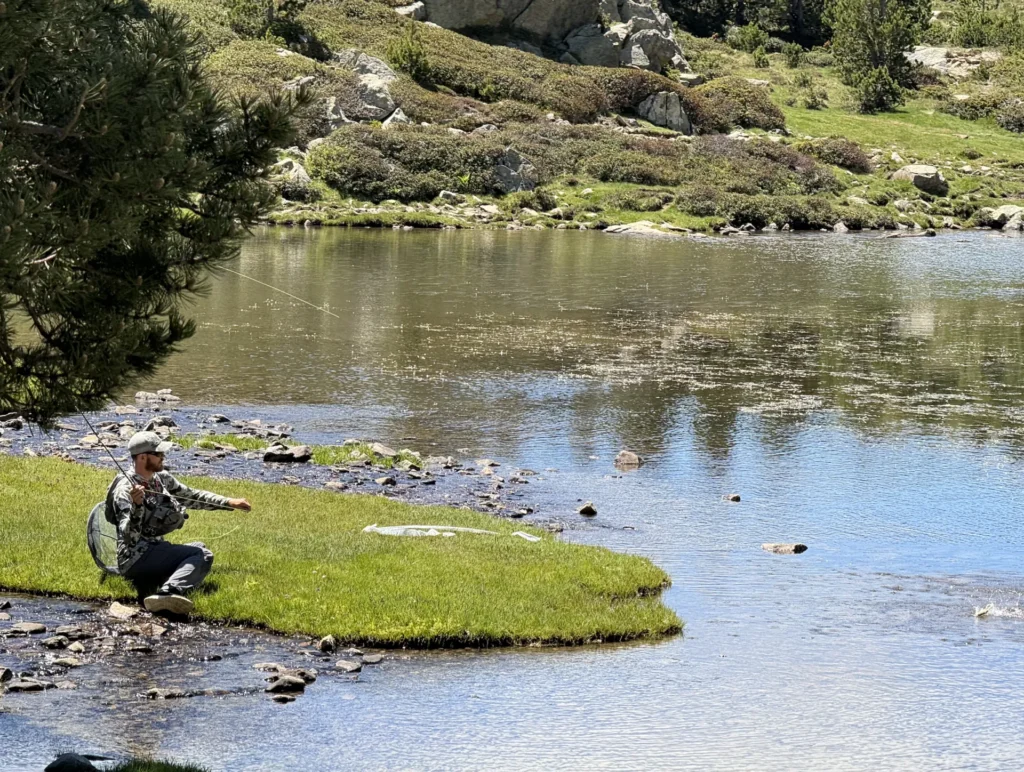
Both anglers primarily fish long Euro rods in the 10-foot to 10.5-foot range, mostly in 2- and 3-weight models. Michael fishes the Highland Stealth series for nearly everything from nymphing to dry flies.
Mike also explains solid-tip rod technology, where the final section of the rod is solid carbon instead of hollow graphite. These rods load better with extremely light flies and help protect tiny fish during competition scoring.
Why Top Competitors Carry Less Gear Than You Think
One of the strongest themes in this episode is simplicity. Mike and Michael both describe moving toward highly minimalist setups over the last several years.
Michael explains that during the World Championships in Italy, he stripped his setup down because bulky chest packs made wading difficult in chalky water. Since then, he’s continued refining his system into just a handful of slim fly boxes and basic tools.
Mike went through a similar transition after a fly box failure during the France championship dumped many of his flies mid-session. That experience helped reinforce how much presentation matters compared to constantly changing patterns.
Minimalist gear essentials:
- 1–2 slim fly boxes
- Nippers
- Floatant
- Leader wax or paint
- Tippet
- Sunglasses
- Net
Fly Changes, Presentation, and Team Strategy
Both anglers admit they don’t actually change fly patterns very often. Mike especially focuses on presentation first before swapping patterns. If he changes flies, he tends to make major changes instead of subtle variations.
The team dynamic also becomes critical during world championships. Anglers constantly share information between sessions, but teammates must trust one another enough to fully commit to the program.
One of the best stories in the episode comes from the France championship, where Michael discovered fish feeding nose-down in lake mud. That unusual observation led to multiple fish after dragging nymphs directly through the mud bottom.
Casting Tips for Micro leaders
When it comes to casting these ultra-light systems, both anglers recommend starting with water-loading techniques. Using the water tension to help load the rod makes learning much easier.
Mike also emphasizes reducing overall casting motion. Most anglers move the rod far too much when trying to cast micro leaders. Compact movements and controlled rod-tip travel produce far better accuracy and turnover.
Key casting tips:
- Start by water-loading casts
- Shorten casting stroke
- Focus on rod-tip control
- Speed and timing matter more than power
You can find Mike and Michael on Instagram @innovative_angling and @fly_fish_cherokee.
Visit Mike’s website at innovativeangling.com.
Team USA at flyfishingteamusa.com.

Conclusion with Mike Komara and Michael Bradley on Micro Leaders and Euro Nymphing
This episode is a solid reminder that modern competition fly fishing isn’t really about carrying more gear or memorizing hundreds of patterns. It’s about efficiency, observation, and learning how to control your presentation at a very high level.
Mike and Michael share a ton of practical insight here, especially if you’ve been curious about micro leaders, Euro nymphing, or how Team USA prepares for world championship competition.